Post 3: Argument
Welcome back to my third blog post. Today I will be discussing how Monique Morris develops her argument in the book Pushout, The Criminalization of Black Girls in Schools.
One of Morris' biggest points is that there a double standard for young girls in school. She interviewed another girl from Chicago named Shai. She explained to Morris that she lives in a prominently White school. Shai described a situation where she was in math class and a White girl got a question wrong. The teacher nurtured her and didn't think anything of it, but if Shai got it wrong, the teacher would say that she's slow and ask what was wrong with her, and not in a concerned and helpful tone. Morris writes that this is frustrating for Shai because they both got it wrong, but somehow only she feels worse. "That triggers it. It does not only make me want to fight them, it makes me want to...it makes me want to ask them, why would they say something like that? The fact that I'm the only Black kid in the school, it's like, 'Oh, are we back in the 1950s now?'" (Morris, page 87). I thought that this specific interviewed showcased the anger that Black women feel when they're compared on a double standard, which just contributes more to her argument, that Black women are not treated equally in the school system.
Another example of a double standard between Black and White women that Morris focuses on is attitude. She was observing a classroom in California, and watched as a student let out a sigh and put her head down. The teacher came up to her with a nonjudgemental tone and asked her if she was upset. The student was simply tired and hungry, and they had a healthy conversation. The teacher was a Black women and said that she dealt with "stereotypical, negative perceptions associated with the expressions of Black girls and women," (Morris, page 94). Morris explains that just based on facial expressions, Black women are criticized and automatically labeled as someone with an attitude.
Another big point that the author makes in her book is to show how Black girls are being sexually exploited at a very young age. One of the most shocking examples I read about was when Morris interviewed a fourteen year old girl named Diamond, who said her boyfriend was twenty-five. She said in her free time she hung out with him or was walking the streets looking for sex work. That's awful enough, but the girls that are doing this are also dropping out of school so they can work all the time. At fourteen years old, no one should have to be worrying about making money to support themselves, and especially making money in this way is crazy to read about. Diamond said "'When you're a prostitute, 'cause I have been one for a couple of months now, like, when you're a prostitute, you gotta stop going to school because it's something that you have to do all day,'" (Morris, page 97). Diamond kept emphasizing that "you have to," and it seemed like this was her only option to make money. Morris also wrote that Diamond had been contacted by juvenile court, saying she had to go to school, but she refused. The author wrote that this happens to far too many young Black girls, and it's a huge problem that needs to be fixed.
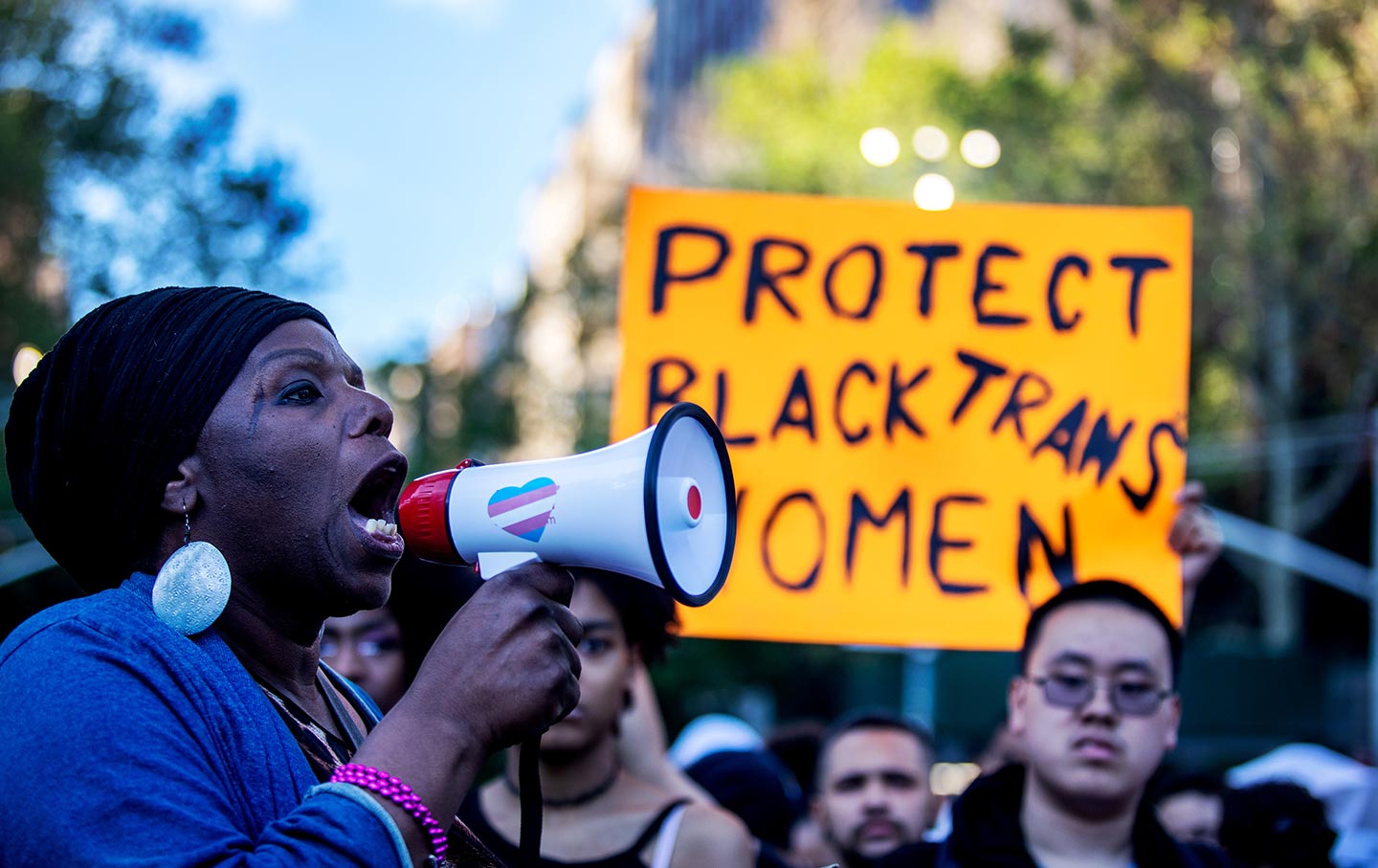
Throughout the book so far, Morris has also talked about Black women who are part of the LGBTQ community. She explains that it's just more stereotyping that Black women get for being themselves. A girl named Paris who lives in New Orleans also talked to Monique Morris. She described that she faced "physical altercations," (Morris, page 90), all the time when she started high school. Paris said that the people in her grade accepted her for who she was, but the new freshmen every year were different. After getting negative things said toward her, she said she punched a few people. Paris explained that she felt she needed to defend herself, which was taught to her by her mother, to not let anyone take anything from her or put her down. Morris writes that Paris' physical safety was in danger "both about the prevailing culture of oppression around her gender identity and about the absence of protection in schools for students who are transitioning their gender during these adolescent years," (Morris, page 92). The fact that a young girl who didn't feel safe at school took matters into her own hands and felt that she needed to be aggressive back, shows that she didn't feel as if going to the principal would've helped.
 |
| Garza |
Another big point that the author makes in her book is to show how Black girls are being sexually exploited at a very young age. One of the most shocking examples I read about was when Morris interviewed a fourteen year old girl named Diamond, who said her boyfriend was twenty-five. She said in her free time she hung out with him or was walking the streets looking for sex work. That's awful enough, but the girls that are doing this are also dropping out of school so they can work all the time. At fourteen years old, no one should have to be worrying about making money to support themselves, and especially making money in this way is crazy to read about. Diamond said "'When you're a prostitute, 'cause I have been one for a couple of months now, like, when you're a prostitute, you gotta stop going to school because it's something that you have to do all day,'" (Morris, page 97). Diamond kept emphasizing that "you have to," and it seemed like this was her only option to make money. Morris also wrote that Diamond had been contacted by juvenile court, saying she had to go to school, but she refused. The author wrote that this happens to far too many young Black girls, and it's a huge problem that needs to be fixed.
Overall, Morris' purpose is to show very clear examples of how Black girls are treated differently in a negative way in the school system. Economic reasons force them to drop out of school and into child prostitution. Black women are also always stereotyped and criticized for things that a White women may not face. I definitely agree with Morris that this needs to change.
Thank you for reading my third post! This book is getting more interesting as it goes on, so I'm excited to see what Morris writes in the next section.
Works Cited
Garza, Alicia. "Eleven Black Trans Women Have Been Murdered This Year. It's Time for Another Uprising." The Nation, 3 July 2019, www.thenation.com/article/archive/alicia-garza-stonewall-transgender/. Accessed 7 Apr. 2021.
Morris, Monique W. Pushout: The Criminalization of Black Girls in Schools. New York City, New Press, 2016.


Good specific details. Do you think that Morris sufficiently proves her point?
ReplyDelete